Hidden Risks in Procurement
Procurement problems rarely arrive with flashing lights. They build quietly in the background — a missed renewal here, a supplier slipping on performance there, a purchase made outside the process because “it was quicker.” Over time, these small cracks turn into costly gaps.
Working with SMEs, charities, education providers and public‑sector aligned organisations, I see the same patterns repeat themselves. Different sectors, different budgets — but the risks are familiar. And most of them are avoidable.
Here are five procurement risks that often go unnoticed, and what organisations can do to get ahead of them.
1. Spend That Slips Through the Cracks
Unapproved purchases, last‑minute renewals, and “quick buys” outside the process are more common than people realise. They feel harmless in the moment, but they create inconsistent pricing, weak terms, and compliance exposure.
How to get ahead of it:
- Set clear approval routes
- Build a simple, usable procurement policy
- Centralise spend data
- Review renewals well before notice periods
Visibility is the first step. Control follows.
2. Supplier Performance Without Real Oversight
Most organisations rely heavily on suppliers, yet formal supplier management is often missing. SLAs drift, issues get handled informally, and performance becomes reactive instead of structured.
What works:
- Scorecards that track delivery, quality, and risk
- Quarterly reviews
- Clear KPIs and measurable SLAs
- A simple risk log
Good supplier management isn’t complicated — it’s consistent.
3. Contracts Stored Everywhere Except Where They Should Be
Contracts sitting in inboxes, shared drives, or personal folders is one of the most common risks I see. Renewal dates get missed, auto‑renewals trigger unexpectedly, and obligations fall through the gaps.
Fix the basics:
- Create a contract register
- Track renewal dates and notice periods
- Review SLAs annually
- Benchmark pricing before renewal
A contract register alone can prevent thousands in avoidable spend.
4. Limited Spend Insight
Many organisations believe they understand their spend — until the data is pulled together properly. Fragmented systems, inconsistent coding, and missing detail make it hard to see where money is actually going.
Improve visibility by:
- Categorising spend
- Identifying consolidation opportunities
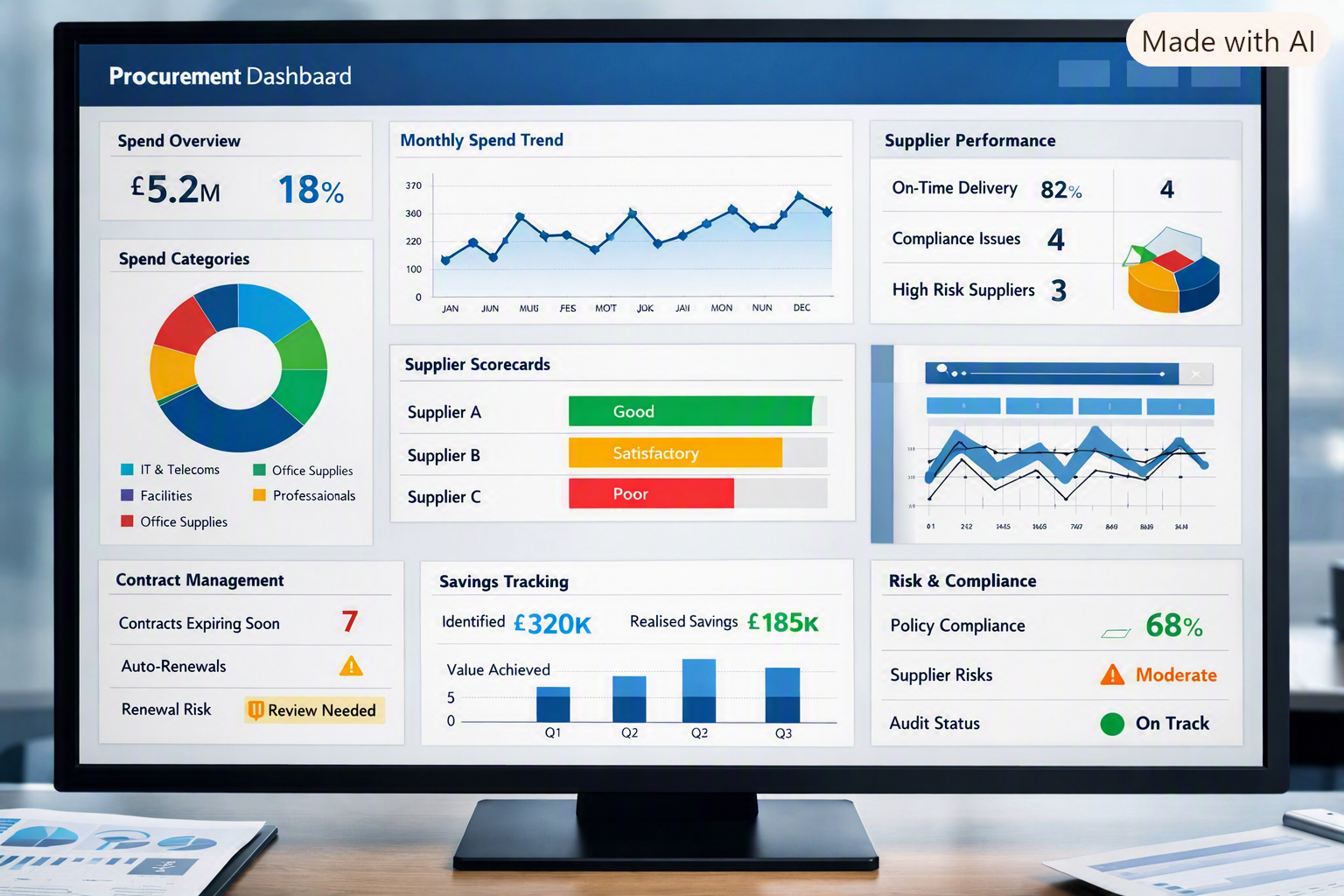
- Building simple dashboards
- Tracking savings and value delivery
You can’t manage what you can’t see.
5. Procurement That’s Always Reacting
When procurement is stuck in firefighting mode, value creation becomes secondary. Renewals are rushed, sourcing is tactical, and stakeholders lose confidence in the process.
Shift to strategic by:
- Building category plans
- Aligning procurement with organisational goals
- Creating a 30‑60‑90 day roadmap
- Investing in capability building
Strategic procurement doesn’t require a large team — just structure.
How ProcureRight Consulting Helps
My work is built around giving organisations clarity, structure, and measurable value. Through Procurement Health Checks, Strategic Sourcing, SRM frameworks, spend analysis, and governance improvements, I help clients strengthen procurement without the cost of a full‑time team.
Small changes create big impact — and most organisations are closer to strong procurement than they think.